
Gap in services inspires new support provider
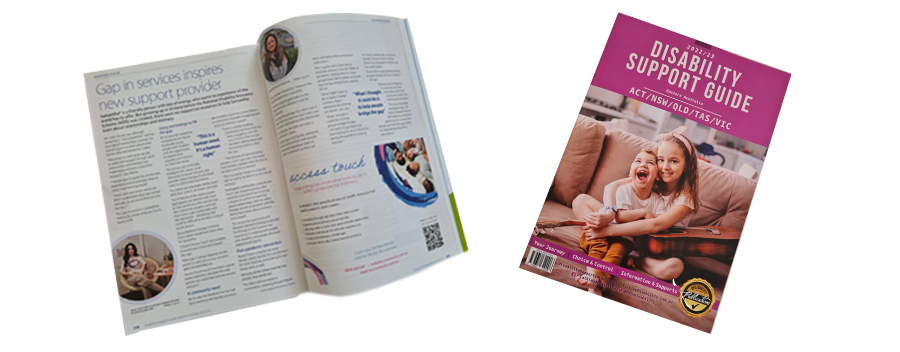
As published in the 2022 Disability Support Guide – Eastern Edition.
Samantha* is a friendly person with lots of energy, who wants to experience all the world has to offer. But growing up in Victoria before the National Disability Insurance Scheme (NDIS) was created, there were no supportive resources to help Samantha learn about relationships and intimacy.
Her sister, Alyssa, says although Samantha is “very empathetic” and has that side of relationships covered, the lack of support to learn about other factors affected Samantha’s safety.
“Watching my sister grow up into an adult and navigate through adult relationships and intimacy was challenging without a supportive resource,” says Alyssa.
“I would have to guide her on my own experience and knowledge when at times I was learning myself. “There were also times where she didn’t understand what was normal and safe, so we would find out after the fact.”
This gap in services is something Patricia Vo, owner of Access Touch, wants to fill.
Using technology to fill the gap
Ms Vo recently started her company Access Touch, to provide young people with disability with the opportunity to explore their sexuality and intimacy on their own terms.
The service uses Artificially Intelligent (AI) robots, as an alternative to escort services, and provides linked therapy if individuals want to add to their experience. The robots are essentially lifelike smart dolls that come in all shapes and sizes.
The AI feature of the robots means participants can interact with them as they would any other person, but also control the situation and take their time to get comfortable with the interaction – something that could be difficult to do when using an escort service.
Alyssa believes therapy involving these robots would have been ideal for Samantha.
“I think if Access Touch was available, it would have immensely helped,” she says.
“Although it always depends on the parent or carer about how closed or open-minded they are.
“One thing you don’t want to do is become an additional barrier to opening access to normal everyday experiences like intimacy and relationships.
“Access Touch would have been a great option back then, because the only options you really had were sex escorts and porn.”
As a teenager, an autistic child will begin to feel a connection or attraction to another person and may want to explore this. Many autistic children struggle with the idea of boundaries as they find it difficult to read social cues from the other person – meaning it can be difficult to know if the person is interested or not, or if they are becoming too close. It is important to have a conversation with the young person about boundaries and consent to ensure that they are aware of how others are feeling . This will allow them to feel more confident when approaching someone that they like and will reduce the chances of confrontation or rejection that may leave them feeling unhappy.
A community need
Ms Vo says the feedback she has had from meeting with families at events like disability expos has shown there’s a community of people struggling with access to intimacy support.
“There’s a whole disability community out there that has been struggling with this sort of access that no one has been talking about and no one has tried to solve,” she says.
“The amount of overwhelming emotions that I have seen first-hand from families validates that this has to be done and this is needed.
“This is a human need, it’s a human right as well to be able to access sexual intimacy.”
Participants and families using Access Touch can choose to bring a doll home for a period of time to bring a degree of comfort to learning about relationships, and can add a therapy session or program with the doll to learn more about intimacy and consent.
The service has partnered with Pleasure Centred Sexology to provide the therapy as the business has experience in working with people with disability and people who have experienced trauma.
Post-pandemic connection
Access Touch currently has three female robots, but Ms Vo is on the hunt for more diversity and looking for non-binary dolls as well.
Not only do the robots look like real people, they speak too!
The robot will not initiate a conversation, meaning the participant has to initiate interaction, however the doll will respond to a question.
The more a participant talks to the robot, the more talkative it will be in response.
The initial knowledge the robot uses is taken from the internet, but it also uses AI to learn and build on the interaction.
For example, the dolls can learn a participant’s name.
But the idea is not for the service to replace relationships with people, just to help individuals learn in a safe environment so they can then strengthen their connections with others.
This is particularly important as Australia recovers from the COVID-19 pandemic, during which so many people have had to isolate and avoid face-to-face interactions, explains Ms Vo.
“What I didn’t want to do is replace human intimacy, that’s definitely not what we are about,” she says.
“What I thought it could do is to help people bridge the gap – it’s such a huge leap to go from having no social interaction during the pandemic to being intimate.”
As a family member who can see the benefits of Access Touch’s service, Alyssa has a message for families who may need support.
“Know when to get professional help, be open minded with new solutions,” she says.
“Families can often get stuck in a cycle and therefore can often become close-minded to trying new things.
“Be brave, and courageous to reach out, and have those open and honest conversations about sex, intimacy and education.
“The more knowledge participants have – the better equipped they are with protecting themselves against abuse or sexual harm, but also give them the opportunity to independently enjoy life to some degree.”
*name changed for privacy reasons.